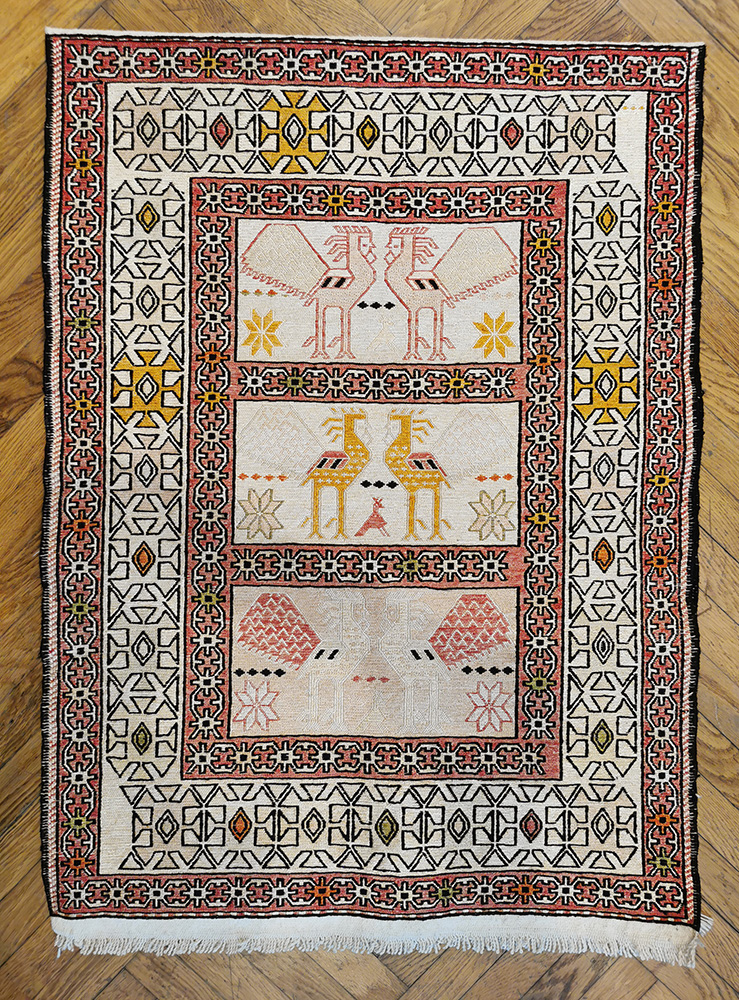
This silk soumak kilim is a magnificent example of traditional Azerbaijani textile art. It is crafted using the soumak technique, in which colored threads are wrapped around warp threads, creating a slightly raised structure characteristic of this type of weaving. The kilim is woven from silk, which is clearly evident in its delicate sheen and fine texture.
The central section of the kilim is divided into three horizontal registers, each with a different motif. The upper register depicts two stylized birds facing each other, likely phoenixes or eagles, symbolizing protection, power, or spiritual resurrection. The middle section features two upright animals, possibly deer or horses, with emphasized saddles, suggesting themes of freedom, fertility, or nobility. The lower section displays two dome-shaped forms that may represent mountains, tents, or abstract architectural symbols associated with nomadic heritage or sacred places.
Surrounding these central motifs are stylized eight-pointed flowers and stars, common symbols of the sun, eternity, and fertility. The kilim is bordered by multiple bands of geometric patterns, including crosses, diamonds, and stars, which often serve protective or talismanic functions. The color palette includes natural silk white as the base, complemented by dark red, yellow, orange, green, and black. The colors are soft and natural, characteristic of traditional plant-based dyes.
Based on its style and craftsmanship, this kilim likely originates from northern Azerbaijan, possibly from regions such as Sheki, Quba, or Lahij, which are renowned for silk soumak textiles. Historically, such kilims were often created as prestigious objects, used for special occasions, weddings, or as part of a dowry. This is not merely a decorative piece, but a bearer of symbolism, history, and identity characteristic of the Caucasian cultural region.