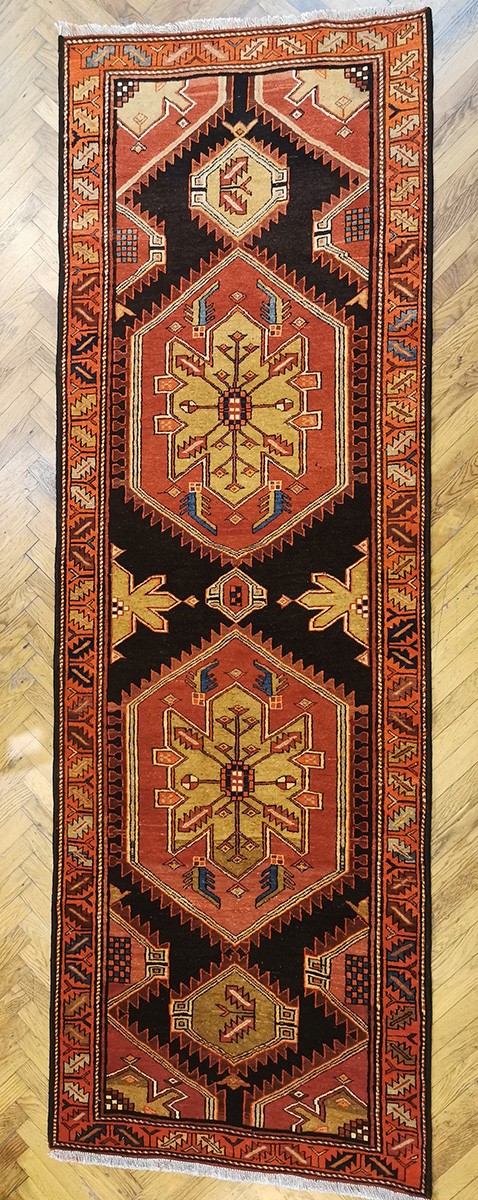
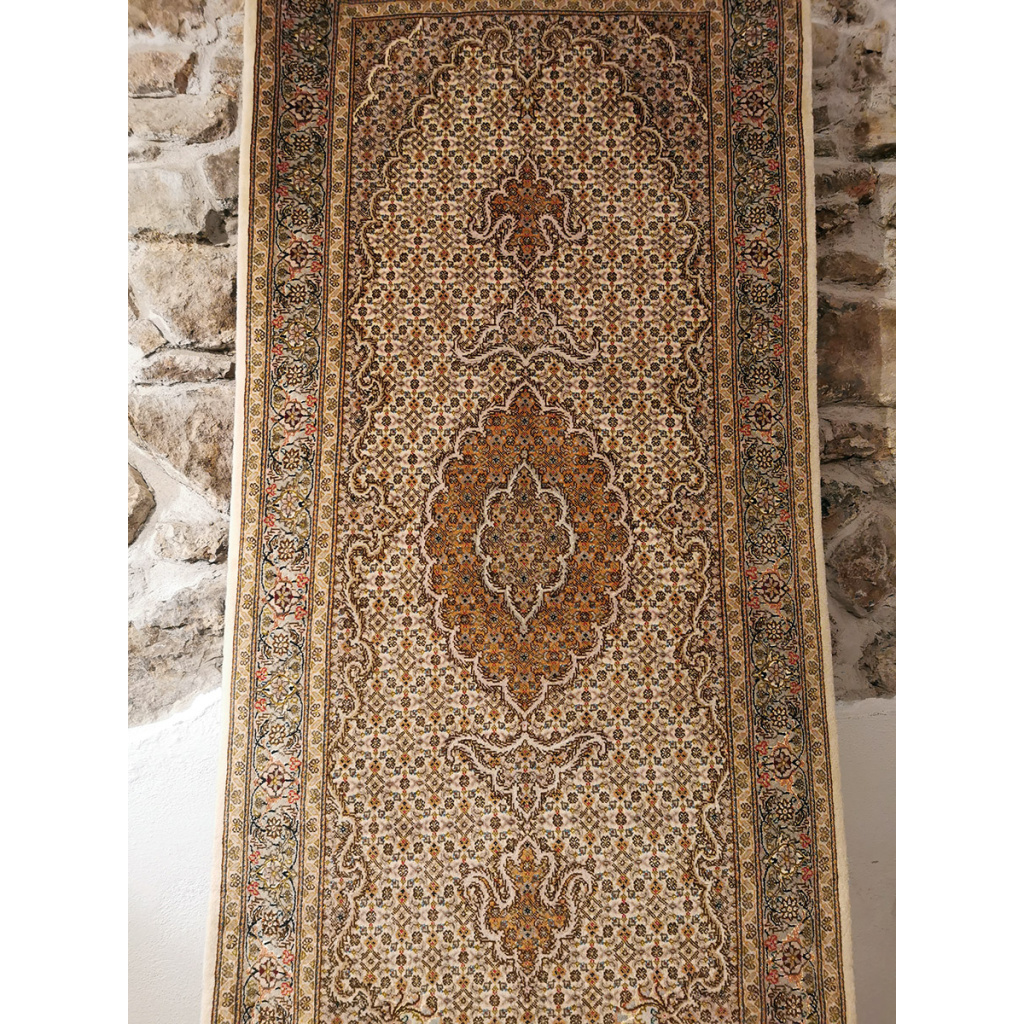
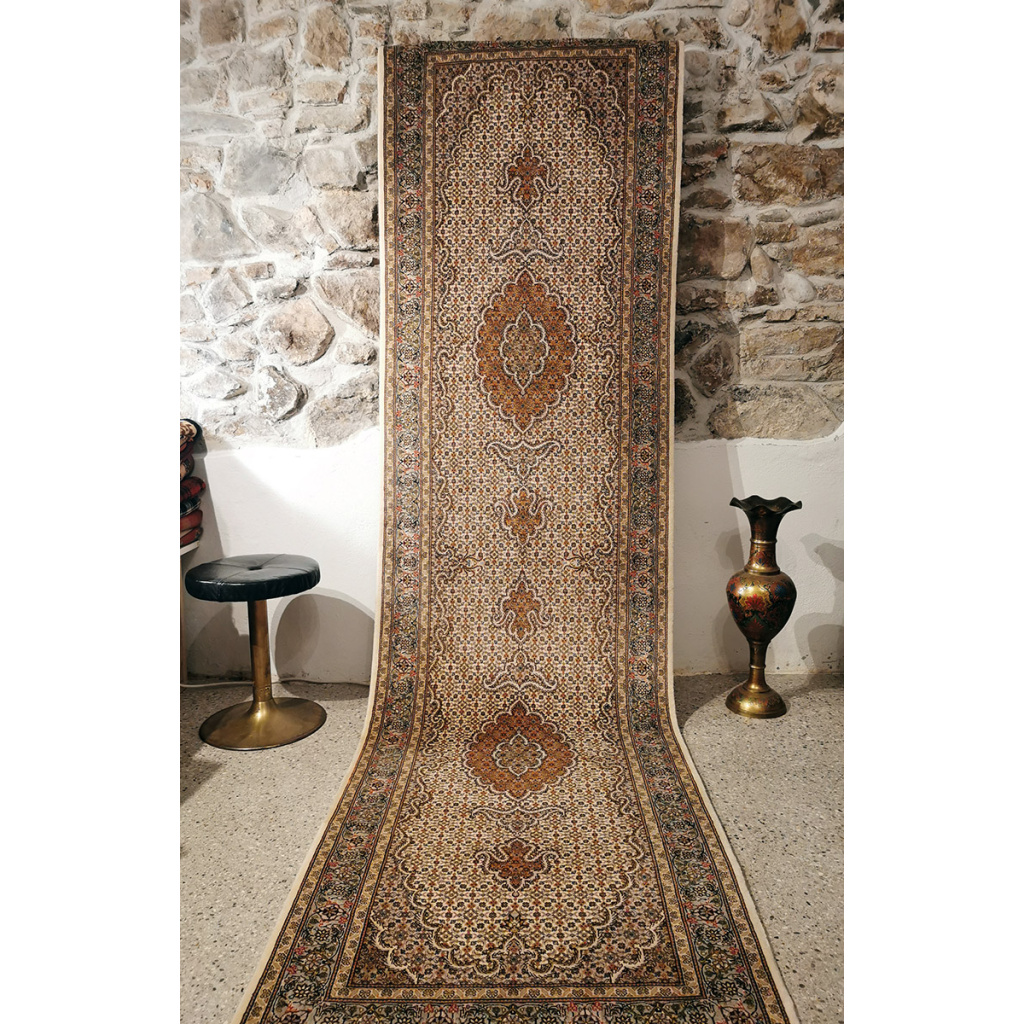
Ardabil is located at 1200 meters above sea level in northwestern Iran in the Ardabil province. The name derives from the Zoroastrian word Artavil, which denotes a holy place. The city is mentioned in the Zoroastrian sacred text Avesta, which records that Zoroaster was born by the Aras River and wrote his scriptures in the Salaban mountains. One of Ardabil’s main landmarks is the tomb of ruler Safi al-Din Ardabili, who died in 1334. In his time, he was a leader of Sufis who followed him in practicing mystical Sufism. One of his successors, Shah Ismail, after several centuries of foreign rule, reunited Iran and introduced Shiism as the state religion. He was the founder of the Safavid dynasty, during which Iran again achieved a flourishing in the arts. Ismail’s son Shah Tahmasp expanded the shrine with the tomb in 1530, and during this time the famous Ardabil carpets were also made for this space. According to reports by two British travelers, the carpets were still in their place in 1843, but 30 years later an earthquake severely damaged the tomb and they were sold to raise money for restoration. They were purchased by a British company, and because they were damaged, some parts of one carpet were used in restoring the other, which was evident in that one carpet was missing its border. In 1892, the larger carpet was put up for auction in London, where designer William Morris became enthusiastic about it and convinced the museum management to purchase it for 2000 pounds at the time. The smaller one was sold to an American collector and is now in a museum in Los Angeles. Today, Ardabil with its surrounding villages is an important center for the production and sale of carpets. By construction, colors, and patterns, they can be counted among Caucasian carpets, especially those that imitate the Kazak style. They usually have two weft threads between two rows of knots on a cotton foundation, symmetrical knots, geometric patterns, and the colors are subdued and harmonious. However, carpets from the wider Ardabil province area can be very different from each other, as peoples such as the Afshar, Kurds, Baharlus, and Shahsavan live there, each with their own tradition in carpet making. The Shahsavan are a kind of tribal confederation established under the direction of Shah Abbas in the seventeenth century to defend Iran’s borders together with his army. Those who have not yet settled still spend summers in the mountains along the Caspian Sea and migrate in winter to the plateaus south of Tehran and east of Hamadan.