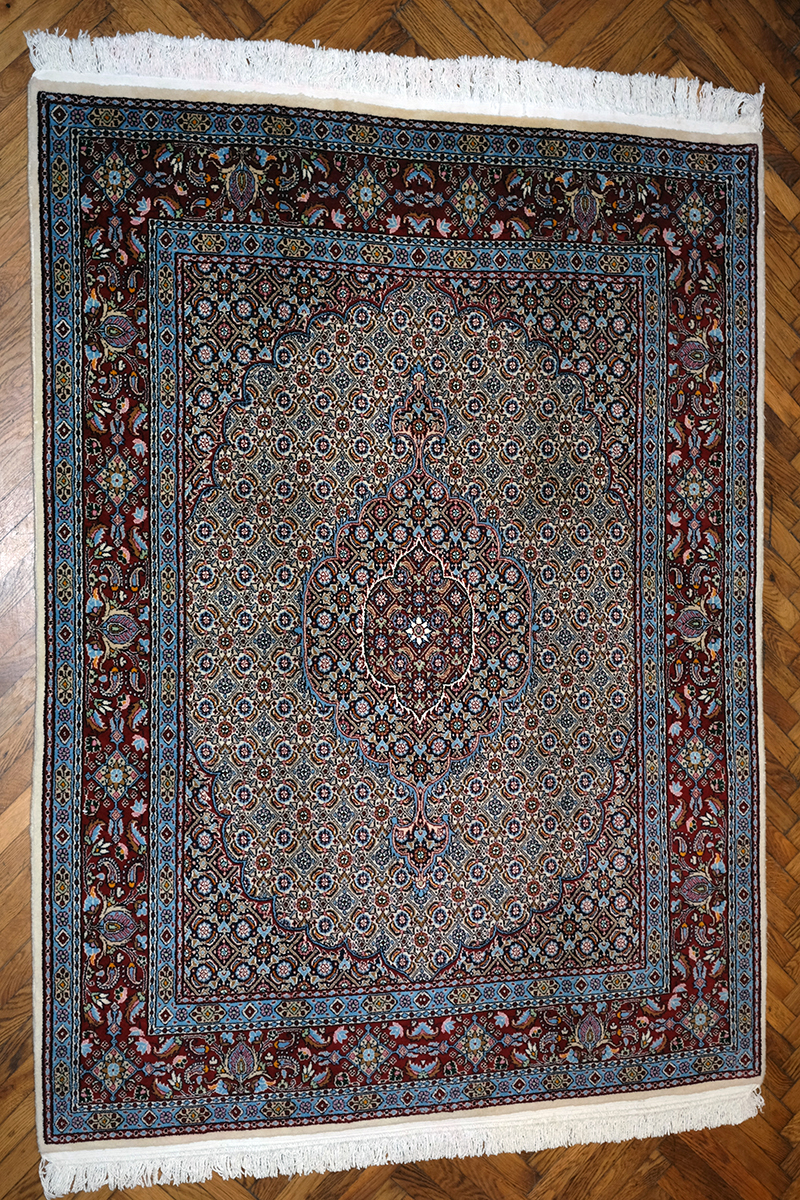
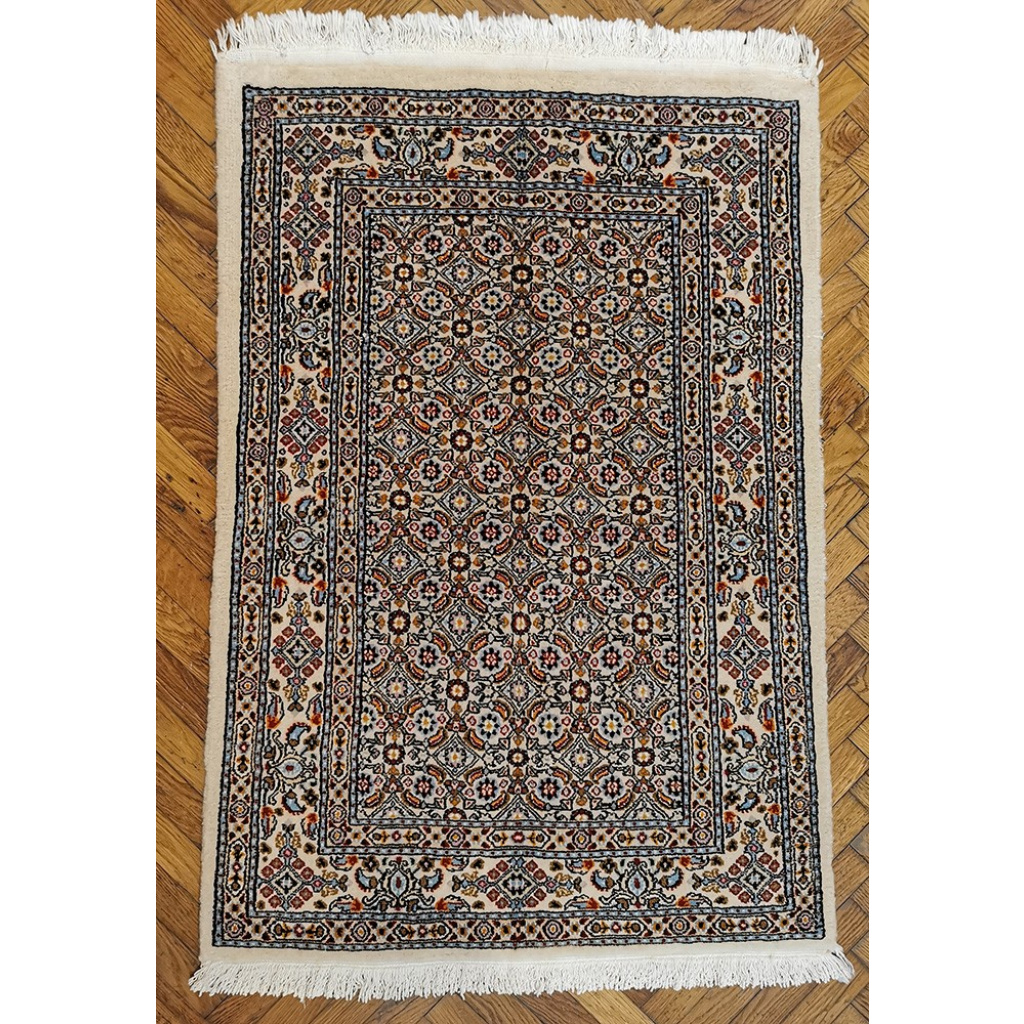
This rug is a fine example of classic Persian Moud design, often woven from wool with silk details. Moud rugs originate from the Moud region and are known for their exceptionally fine geometric-floral pattern and a lighter color harmony.
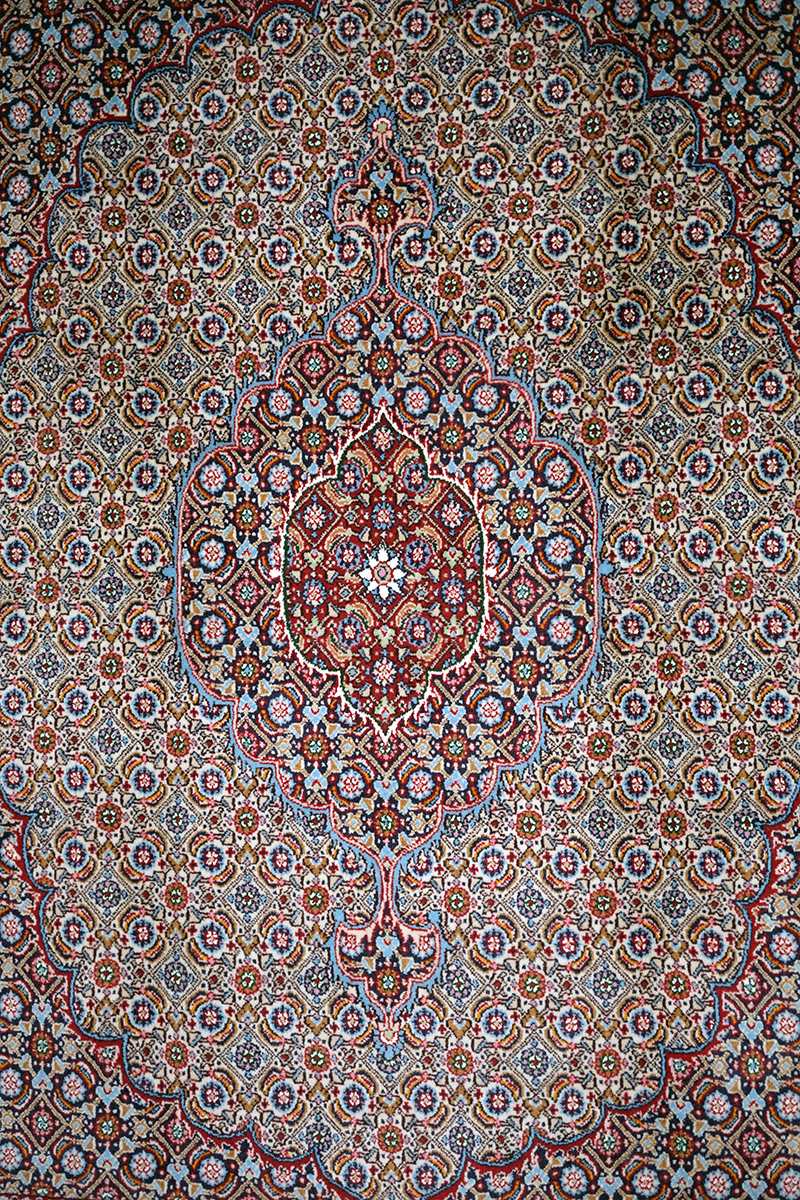
A Moud-type Persian rug from the Moud region combines a rich ornamental tradition with an exceptionally refined composition. Its aesthetic is based on a harmonious balance between geometry and floral motifs. At the center is a pronounced medallion that serves as the visual core of the composition, reminiscent of architectural domes or decorative elements of Persian palaces and mosques. Around it spreads a densely woven field with a fine repeating Herati, or Mahi, pattern, where small diamonds, flowers, and stylized leaves create a sense of rhythmic movement and an almost endless ornamental garden. This pattern has a long tradition in Persian art and symbolically connects the idea of natural fertility, water, and the cycle of life.
The color harmony is characteristically well balanced. The light ivory ground of the central field gives the rug airiness and brightness, while the dark red border creates a strong frame and emphasizes the overall composition. Blue and turquoise tones in the ornament bring cool balance to the warm hues and create a sense of depth. The combination of wool and silk gives the rug special aesthetic value. Wool provides softness and warmth, while silk highlights in the fine ornaments catch the light and create a subtle sheen that makes the pattern appear almost three-dimensional.
Although the rug has a distinctly traditional origin, it also pairs surprisingly well with contemporary settings. Thanks to the light central field and balanced color palette, it does not feel heavy or old-fashioned, but adds a layer of texture and visual complexity to the space. In minimalist interiors, such a rug can serve as a central art piece that softens the clean lines of modern furniture. In contemporary living rooms or open-plan spaces, it creates a sense of warmth and cultural depth without overwhelming the room. Traditional ornament contrasted with modern materials such as concrete, glass, or metal often creates a highly convincing aesthetic balance between old and new.
That is why Moud rugs are not merely decorative textiles, but an expression of a long artistic tradition that can function in a modern space almost like floor art.
The aesthetics of this rug
1. Central medallion composition
The main aesthetic element is a large central medallion that serves as the visual focal point.
Characteristics:
Such a medallion has an architectural function—similar to a dome in a Persian mosque.
Visual effect:
2. Herati (Mahi) pattern
The central field is almost entirely covered with a very fine repeating motif called the Herati or “Mahi” pattern.
This pattern includes:
-
small diamonds
-
stylized leaves
-
small flowers
The name Mahi means “fish”, because the leaf shapes resemble two fish around a flower.
Meaning:
This motif is very characteristic of regions in eastern Iran.
3. Color harmony
The color palette is elegant and balanced:
main colors:
This combination is typical of rugs from:
The colors create a sense of:
-
brightness
-
elegance
-
aristocratic restraint.
4. The border as a frame
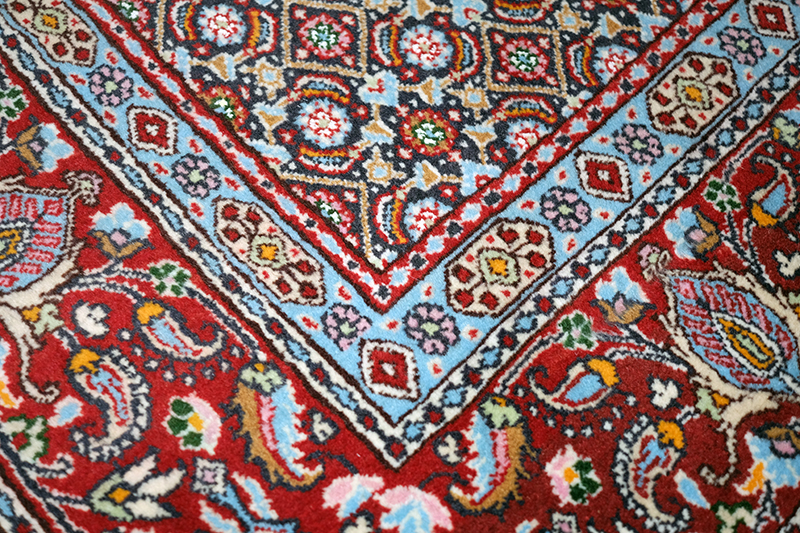
The red border is very rich and functions as a picture frame.
You can see:
The border creates contrast between:
-
the light center
-
the darker edge.
5. The role of silk in the ornament
Because the rug is wool + silk, the silk typically highlights:
When light falls on the rug, the silk creates a subtle shimmer, making the pattern look almost three-dimensional.
This gives the rug a sense of:
-
luxury
-
refinement
-
visual depth.
Overall aesthetic impression
This rug combines three key elements of Persian aesthetics:
geometry + garden symbolism + architectural symmetry
As a result, it feels like:
Save
Save
Save