The city of Tabriz is located 600 km west of Tehran and is the capital of the Azerbaijan province. The Azeri people living there are the most numerous ethnic minority in Iran and speak a Turkish dialect. Tabriz is an ancient city that has held a significant trading position in the border region for centuries. The Blue Mosque and the Grand Bazaar are particularly renowned.
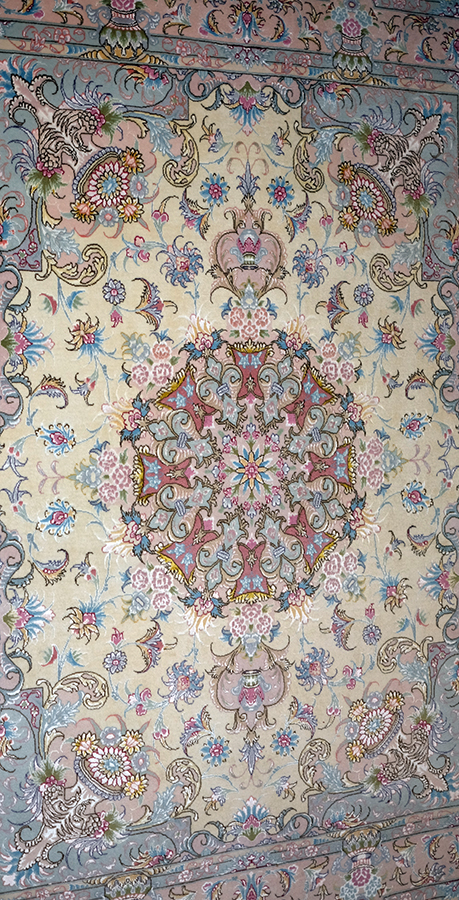
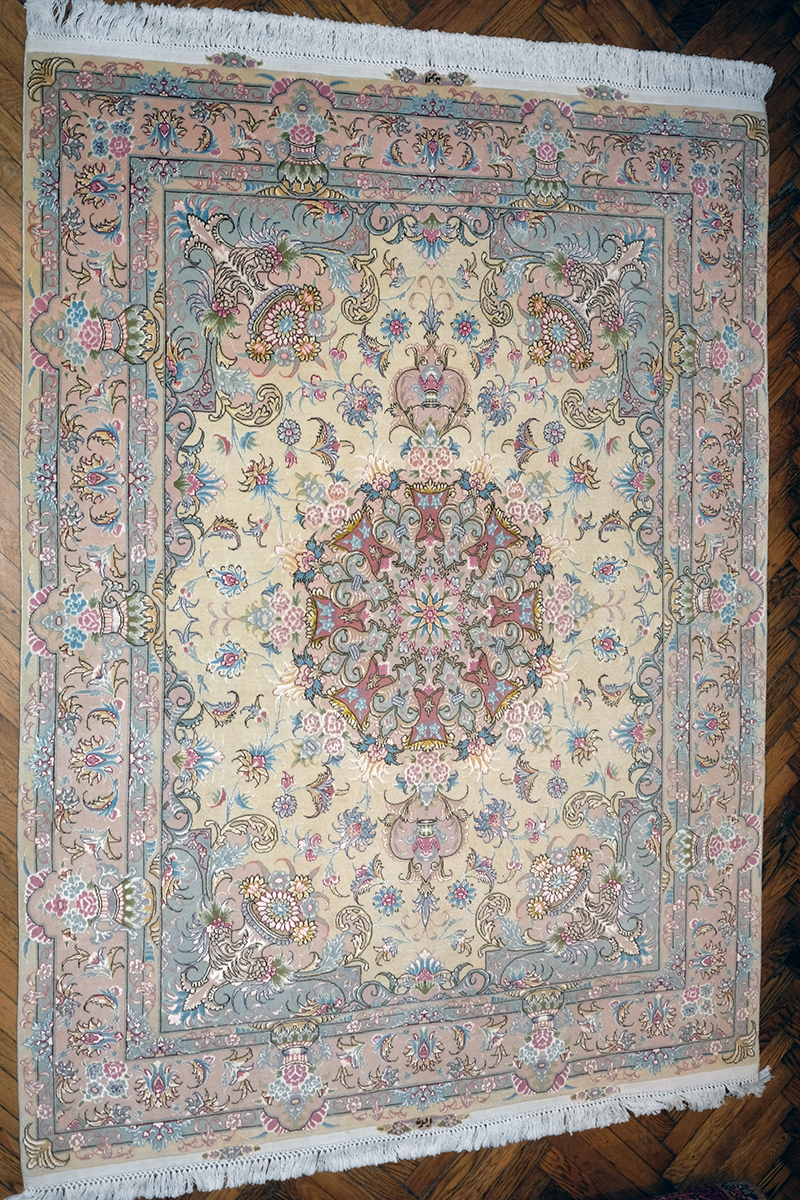
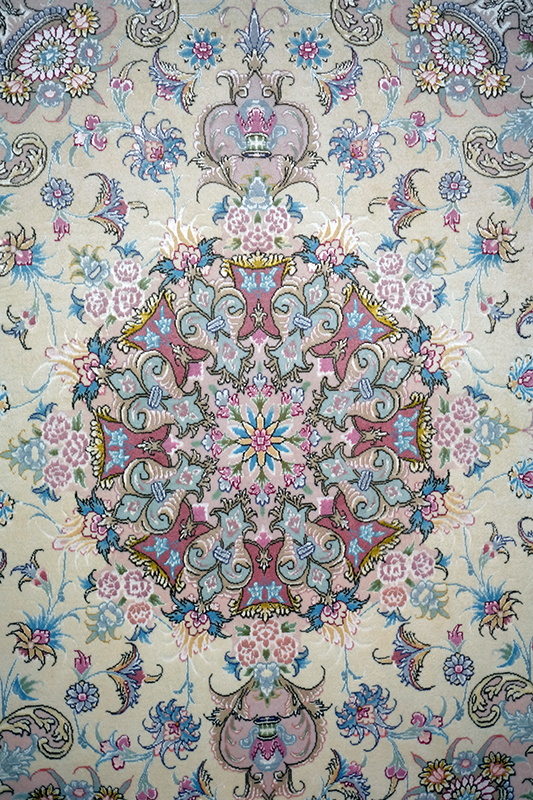
High-quality Tabriz rugs feature short and strong knots. A characteristic pattern is the central medallion motif (Persian: toranj) surrounded by arabesques, vines, or cypress trees (boteh motif). Another well-known motif is that of the four seasons. Sometimes, the greatest Persian poets such as Saadi, Hafez, Ferdowsi, and Omar Khayyam are also woven into the rug.
For millennia, Tabriz has been a meeting point for various cultures, and its bazaar is one of the most important trading centers along the former Silk Road. The Grand Bazaar is located in the city center and comprises several smaller bazaars, such as Amir Bazaar (jewelry, gold), Mozzafarieh (rugs), and many others. The city experienced its greatest flourishing during the Safavid dynasty in the 16th century, when Tabriz served as the capital of the Safavid kingdom. The Safavid dynasty supported the arts, and during this period, invaluable masterpieces were created, which are now exhibited in major museums worldwide (New York, London, Paris, Vienna).
The Safavid dynasty, named after Sufi Muslims and originating from Ardabil in northwestern Iran, adopted Shi’ite Islam, reunified the country, and fostered the development of the arts. During their reign, Persian art experienced a true renaissance. Calligraphy, painting, leatherwork, architecture, and rug production flourished. During this time, Persian court artisans, painters, and other artists created intriguing rug patterns and motifs that are still emulated today. The masterpieces of Safavid court rug makers were so sophisticated and refined that few have managed to precisely recreate the original Safavid motifs to this day. These masters created approximately 1500 court rugs during this period, many of which are world-renowned masterpieces. Safavid kings such as Shah Tahmasb and Shah Abbas established court workshops for rug production in cities like Kashan, Isfahan, Tabriz, Qazvin, Kerman, and many other parts of Persia at that time.
The diaries of European travelers such as Jean Tavernier and Jean Chardin (17th century) provide an excellent insight into rug making during that era. Persian rugs began to penetrate European markets, with one of the most recognizable rugs of this period being the Ardabil Carpet, created in the early 16th century. Due to its magnificent colors, patterns, and exceptionally fine silk threads, it is considered one of the greatest masterpieces among older preserved knotted rugs. In the 19th century, a British company acquired it and sold it for 2,000 pounds sterling to the Victoria & Albert Museum in London, where it can still be admired today. Its dimensions are 11.53 x 5.34 meters. Expert opinions diverge regarding its origin; some argue it was made in Ardabil, while others believe it originated from Mashhad, which, of course, does not affect the rug’s value. The bottom part of the rug also bears the master’s signature and a verse by the great Persian poet Hafez. Shah Abbas designated Isfahan as his capital (previously Ardabil) and ensured it became the center of all arts. Palaces and mosques were built, perfected by the most skilled masters and artists at his disposal. He also established a court rug workshop, where rugs were made not only for the Shah but also for the workspaces and homes of court officials. The Ardabil Carpet illustrates the interesting development of Persian rugs in the fifteenth and sixteenth centuries. With its central medallion and spirals, it resembles miniatures on book covers of that time. Similarly, its precise patterning and elaborate designs evoke the miniatures of the Safavid court. Another intriguing rug from this period is on display in Vienna’s museum. It is named the “hunting carpet” because it depicts a hunting motif. This motif is a classic in 16th-century Persian rugs, as shahs and princes enjoyed being portrayed as courageous hunters on horseback. The rug shows a hunter with a bow and spear pursuing leopards, antelopes, and even bears. The entire rug is made of silk and measures 6.80 x 3.29 meters. Experts believe the rug was made in Kashan under the guidance of the skilled painter Sultan Muhammad, a student of the famous Persian painter Bizhad.