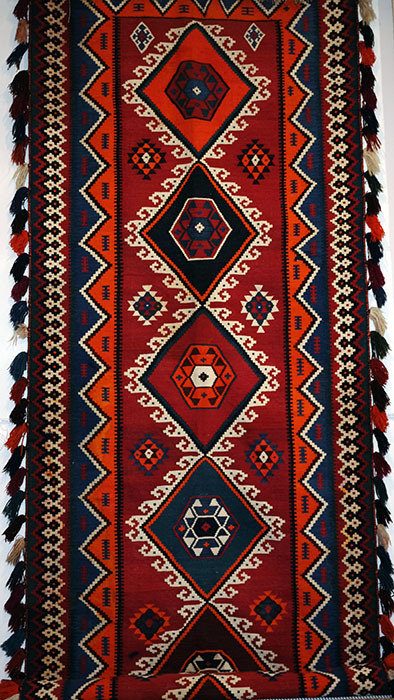
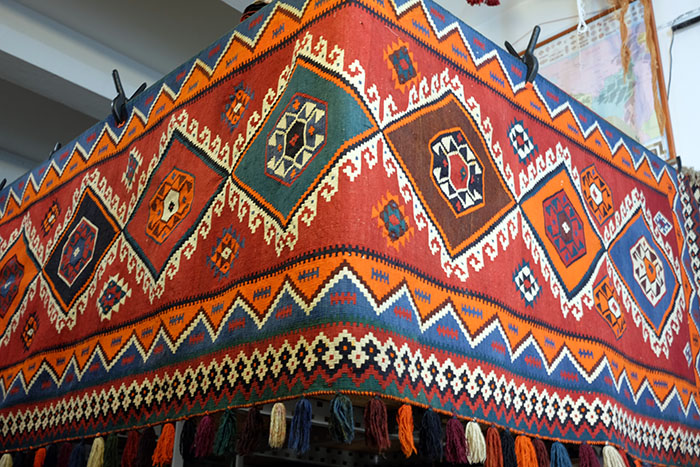
Rugs have always played an important role in families as a means of bride price or dowry. Marriage represented much more than just the union of husband and wife. A girl who was promised to her future husband at a tender age became a connecting link in the alliance of two families. The union of two families was confirmed in practice through the gifting of rugs, jewelry, and other goods. The dowry could also include animals, pastures, and water sources. The young girl, while learning from her mother and other family members, soon began creating her own rugs and other items. Each piece represented the family heritage and folklore of her people. The family’s status was closely tied to the quality and quantity of the bride’s dowry. Therefore, rugs were made with great effort, love, and creativity, even though they were not intended for sale at the bazaar.
The nomadic Qashqai people from the southwestern part of Iran (Shiraz region) are well known for their traditional rugs. In the 16th century, they arrived from Central Asia together with other Turkish groups. Therefore, connections can be found in Qashqai patterns with those from the Caucasus region. These nomads were once renowned for their long and arduous annual migration route from winter quarters by the Persian Gulf to summer pastures in the Zagros Mountains. Since 1925, they have suffered considerably under the repressive policies of Persian authorities.
The Qashqai produce rugs when they are not traveling or at intermediate rest stops. Interesting sudden shifts in patterns and colors are noticeable, as they can only carry small quantities of dyed yarn with them. They often fold the ground looms when the rug is not yet finished and set off on their journey. At the next camp, they unfold them again and continue working, so changes in patterns are not surprising.